
Commercial Flat Roof Repair & Installation in Rochester, NY
Carter Exteriors handles flat roof repair and installation for commercial and low-slope buildings across Rochester, from single-seam patch jobs to full tear-off replacements.
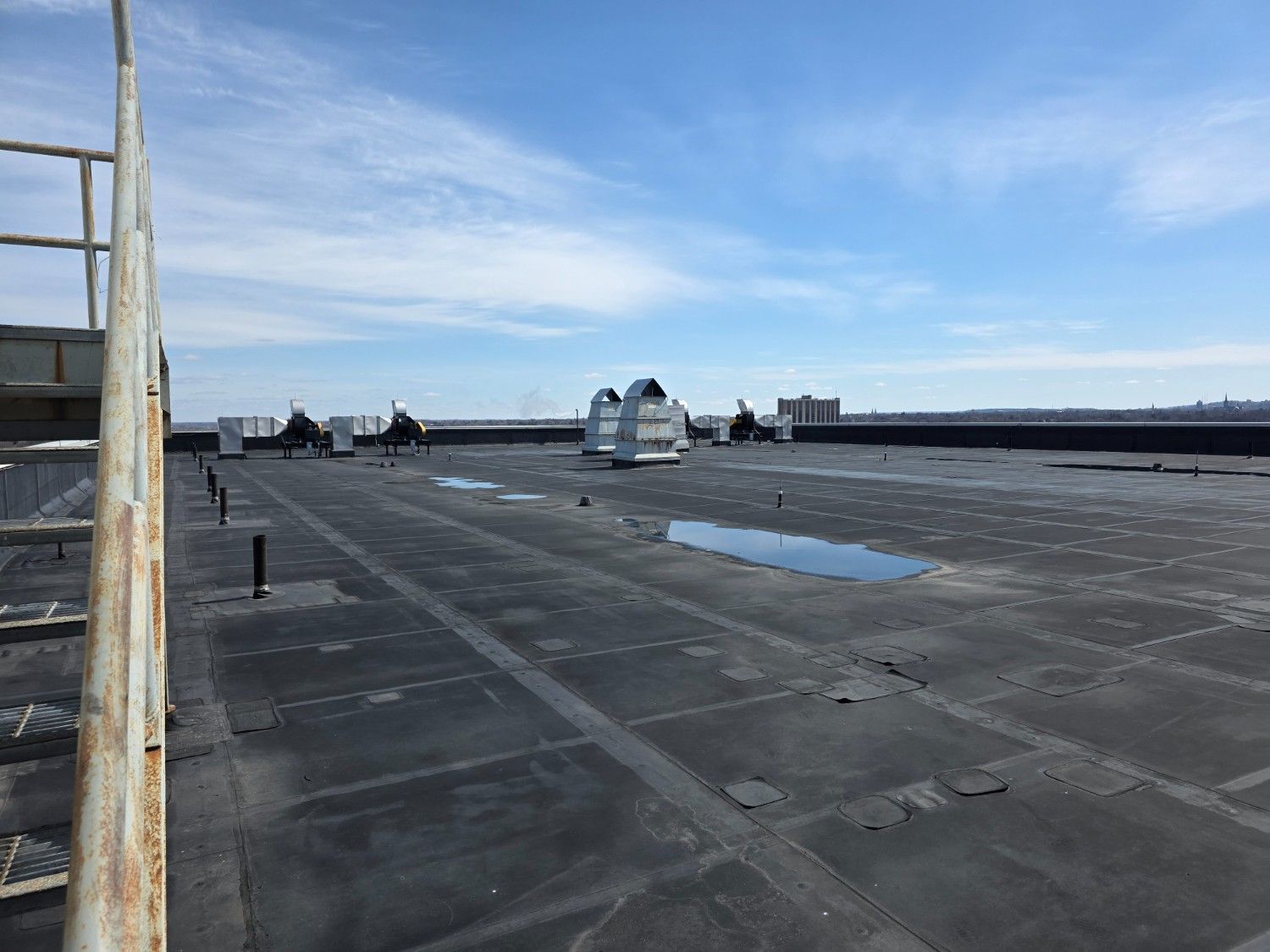
Standing water that hasn't drained within 48 hours of rain is the clearest sign something's wrong, usually a low spot in the deck, a clogged drain or scupper, or insulation that's settled unevenly. Left alone, ponding water accelerates membrane breakdown and adds weight the roof structure wasn't built to carry indefinitely.
Seams are the next most common failure point on single-ply systems. A lap that was under-rolled or under-welded during the original installation, or one that's simply reached the end of its service life, lets water travel under the membrane long before it ever shows up as a leak inside the building.
Flashing around parapet walls, HVAC curbs, pipe penetrations, and roof drains fails more often than the membrane field itself. Most of the leaks we trace back start at a flashing detail, not a hole in the middle of the roof.
Where Flat Roofs Actually Fail
Standing water that hasn't drained within 48 hours of rain is the clearest sign something's wrong, usually a low spot in the deck, a clogged drain or scupper, or insulation that's settled unevenly. Left alone, ponding water accelerates membrane breakdown and adds weight the roof structure wasn't built to carry indefinitely.
Seams are the next most common failure point on single-ply systems. A lap that was under-rolled or under-welded during the original installation, or one that's simply reached the end of its service life, lets water travel under the membrane long before it ever shows up as a leak inside the building.
Flashing around parapet walls, HVAC curbs, pipe penetrations, and roof drains fails more often than the membrane field itself. Most of the leaks we trace back start at a flashing detail, not a hole in the middle of the roof.
Repair or Replace: How We Make the Call
A repair is usually the right call when the problem is contained: a lifted seam, a failed pitch pan, a puncture from foot traffic, or flashing that's pulled away from a wall. If the rest of the membrane is still flexible and the insulation underneath is dry, patching that one area is typically the more cost-effective fix.
Replacement makes more sense once ponding water has been sitting for years, the membrane shows widespread cracking or shrinkage, or a probe of the roof turns up wet insulation in more than one section. At that point, patching individual spots just delays a bigger tear-off and usually costs more over time than doing the full system once.
Rochester's winters add another variable: freeze-thaw cycling can turn a small pool of standing water into ice that expands seams and flashing joints, which is why a leak that shows up in March often started as ponding the previous October.
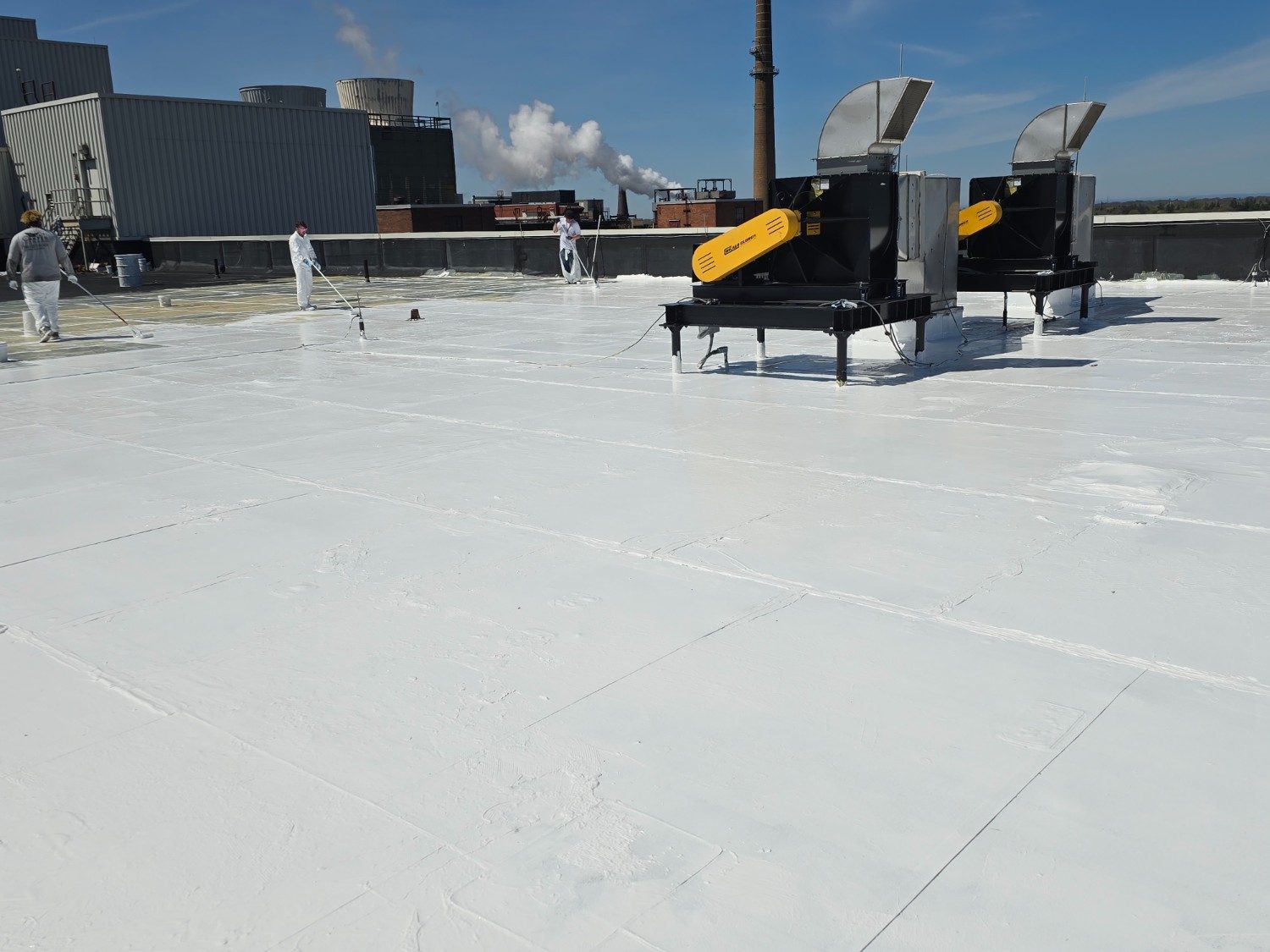
If the membrane still has useful life left and the damage is limited to wear rather than structural failure, a flat roof coating can extend its service life without a full tear-off. That's a separate path from repair or replacement, and one our roof coating services cover in more detail.
Membrane Systems We Install for New and Replacement Roofs
For new installations and full replacements, we install EPDM rubber membrane, TPO, and PVC single-ply systems, along with modified bitumen and built-up roofing for buildings where a multi-ply system fits better. EPDM is usually the more cost-effective option over larger roof areas, while TPO and PVC seams are heat-welded, which holds up well around rooftop equipment and high-traffic zones.
Installation starts with removing the failed system down to the deck, or overlaying where the existing insulation is still sound, correcting slope and drainage where needed, and detailing flashing at every penetration and parapet before the membrane goes down. Getting the flashing right the first time is what keeps a new roof from becoming a callback two years later.
Most of the commercial buildings we work on stay occupied during the job. We stage material deliveries and roof access to keep parking, loading docks, and entrances usable, and keep the property manager or owner updated as the work moves along.
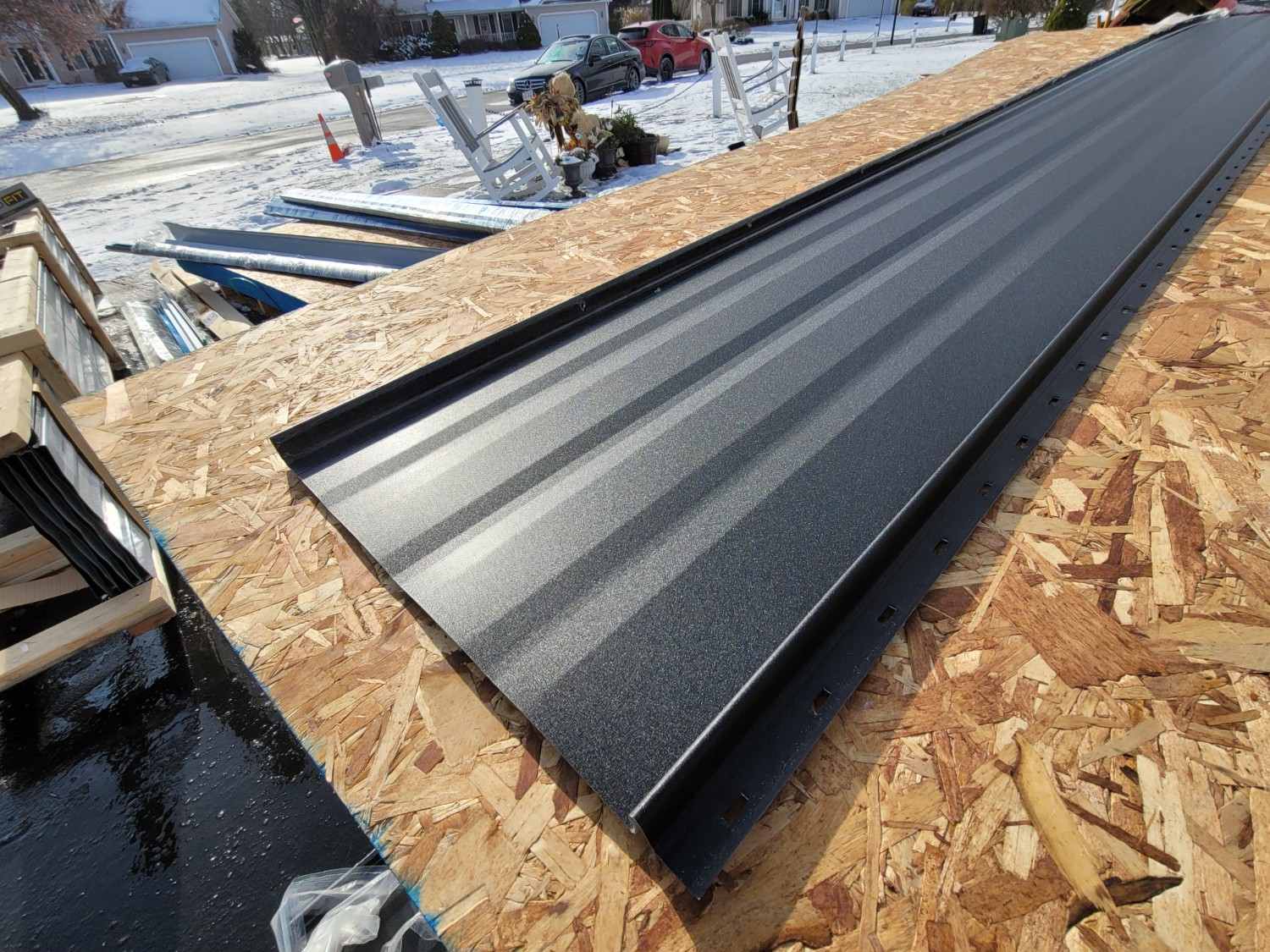
For buildings with mixed rooflines, part flat, part pitched, a metal section sometimes makes more sense than extending the membrane, and we install and repair commercial metal roofing for that situation. Either way, the roof that costs less to maintain over the next twenty years is usually worth more than the one with the lowest install price today.
Licensed, Insured, and Straightforward to Work With
Carter Exteriors is based in Rochester and has spent years assessing and repairing low-slope roofs on commercial buildings across the area. We walk you through what we find on the roof, what it means, and what your options are, in plain terms, before any work gets scheduled.
Licensed & Insured
Manufacturer-Backed Warranties
Free, No-Obligation Estimates
Flat Roof Work From Greece to Canandaigua and Everywhere Between
We handle flat roof repair and installation for commercial and multi-family properties throughout Rochester and the surrounding suburbs, including Irondequoit, Greece, Henrietta, Gates, Penfield, Fairport, Victor, Canandaigua, and Brockport. If your building needs a different roofing system entirely, our full commercial roofing services cover shingle, metal, and built-up systems as well.
Frequently Asked Questions About Flat Roof Repair and Installation in Rochester, NY
Get a Free Flat Roof Estimate in Rochester, NY
Tell us what's going on with your roof and we'll set up a free, no-obligation assessment.